
Why DCOF Values Can Change After Floor Use and Maintenance
Many facility managers assume that once a floor’s DCOF value has been evaluated for safety, it will remain the same for years. Unfortunately, that’s rarely the case.
Floors are constantly exposed to foot traffic, cleaning products, moisture and environmental changes. Over time, these factors can alter a floor’s Dynamic Coefficient of Friction (DCOF) and affect how much traction it provides.
Understanding why these changes happen can help organizations create safer environments for employees, visitors, patients and customers.
Slip Testing and Understanding DCOF
DCOF stands for Dynamic Coefficient of Friction.
In simple terms, it measures how much grip or traction a floor provides while someone is walking across it.
Unlike a visual inspection, DCOF provides measurable data about how a floor performs under real world conditions. This information helps facility teams make informed decisions about maintenance and safety.
Learn more about industry standards from the National Floor Safety Institute: https://nfsi.org/
Why Slip Testing Reveals Changes in Floor Traction Over Time
Floors are not static surfaces.
Every day, people walk across them, cleaning products are applied and moisture is introduced. These small changes gradually affect how a floor performs.
A surface that was safe when first installed may behave very differently months or years later.
How Slip Testing Reveals DCOF Damage From Foot Traffic
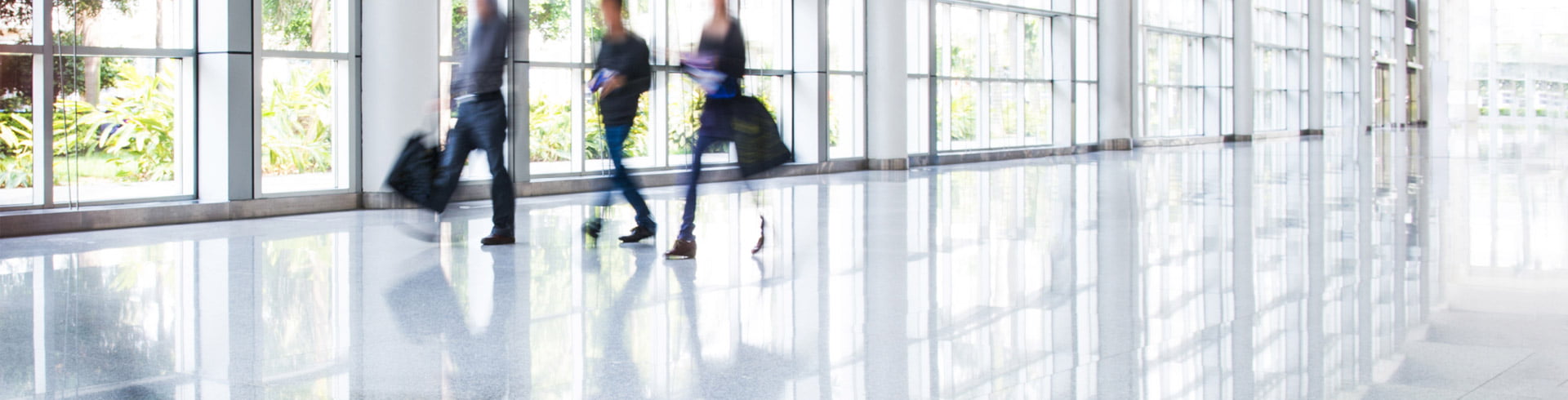
High-traffic areas experience continuous wear.
Over time, thousands of footsteps can slowly polish or smooth a surface, especially in:
- Building entrances
- Hallways
- Elevator lobbies
- Hospital corridors
- Bank entrances
- Reception areas
The floor may still look perfectly normal but its traction may have changed significantly.
This is why routine floor evaluations should become part of an ongoing safety program rather than a one-time task.

How Slip Testing Uncovers DCOF Problems Caused by Cleaning Products
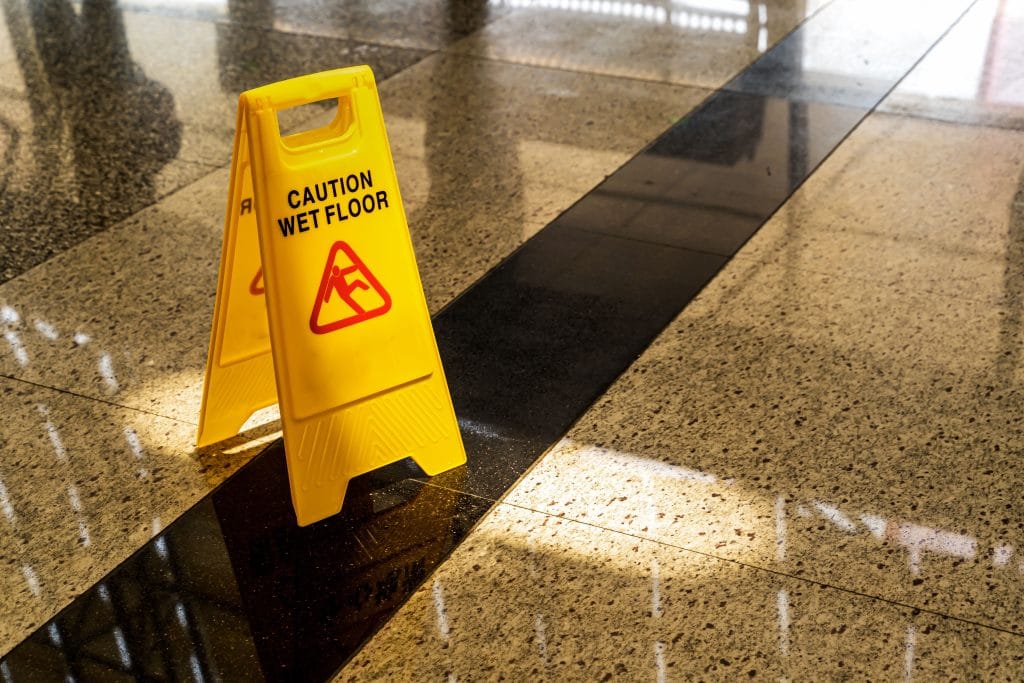
Cleaning is essential but using the wrong products can unintentionally create safety concerns.
Some products leave behind residue that builds up over time and reduces traction.
Common contributors include:
- Soap residue
- Floor polish
- Wax buildup
- Incorrect chemical dilution
- Incompatible cleaning products
A floor can appear spotless while still becoming slippery.
How Slip Testing Evaluates Moisture’s Impact on DCOF
Water is one of the biggest factors affecting floor performance.
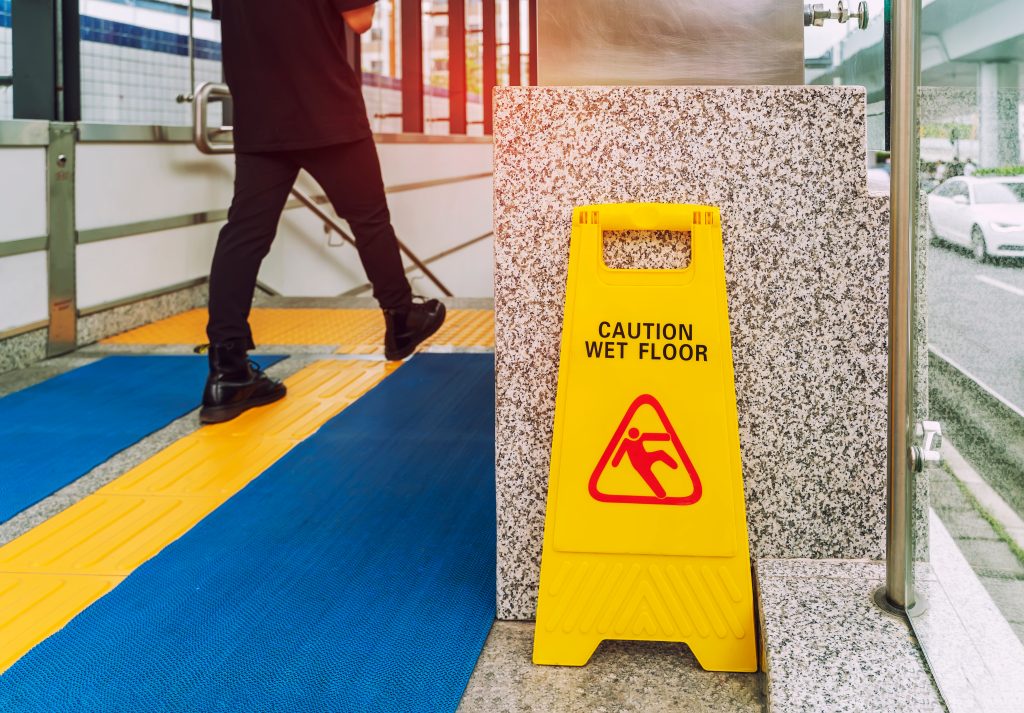
Even surfaces that perform well when dry may become hazardous when exposed to moisture.
Common sources include:
- Rainwater
- Spills
- Routine mopping
- Condensation
- Tracked-in water
This is especially important for entrances, cafeterias, restrooms and public walkways.
How Slip Testing Assesses DCOF After Floor Treatments
Many facilities apply treatments to improve appearance or protect flooring materials.
Examples include:
- Sealers
- Coatings
- Polish
- Protective finishes
While these treatments may extend the life of a floor, they can also change its traction characteristics.
Evaluating floors after treatments helps verify that they still perform safely.
Why Slip Testing Shows Different Wear Patterns Throughout a Building
Not every floor ages the same way.
For example:
A hospital corridor may experience heavy traffic every day, while a conference room may only be used occasionally.
Similarly, a bank entrance exposed to rainwater will wear differently than an office area farther inside the building.
As a result, DCOF values can vary throughout the same property.
Why Slip Testing Supports Ongoing Floor Safety
Many organizations only focus on floor safety after an incident occurs.
However, waiting until someone slips is a reactive approach.
Regular assessments help organizations identify changing conditions before they become serious safety concerns.
Benefits include:
- Detecting hidden hazards
- Monitoring floor performance
- Improving maintenance strategies
- Prioritizing corrective actions
- Reducing slip and fall risks
- Supporting proactive safety programs
How Slip Testing Measures DCOF
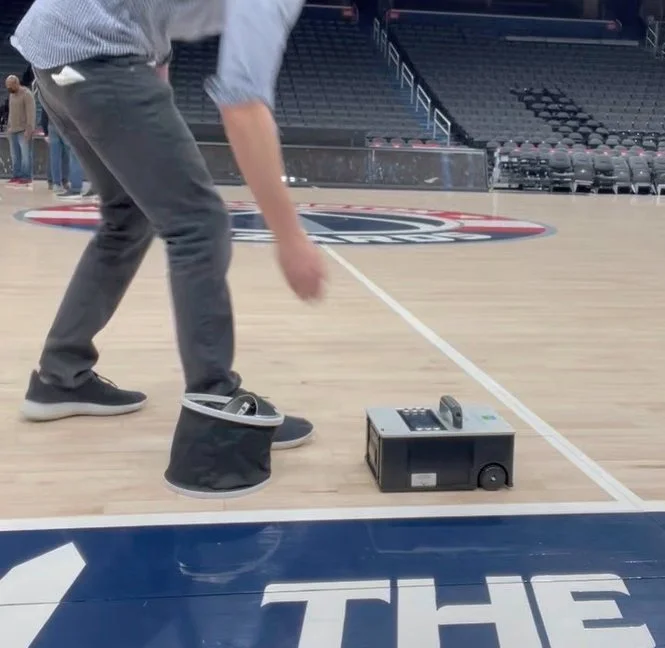
Professionals often use specialized equipment such as the BOT-3000E tribometer.OT-3000E tribometer.
The process typically includes:
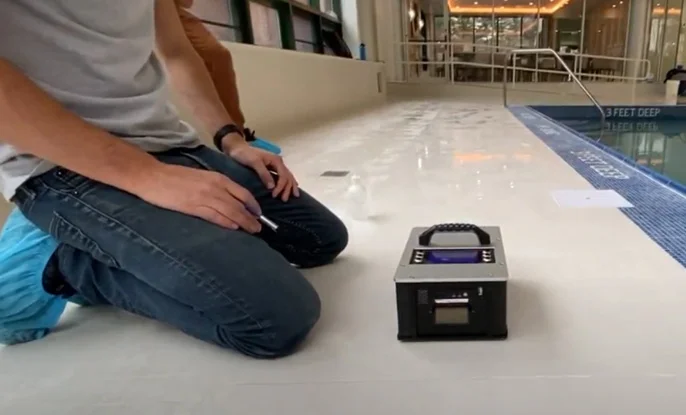
Slip Testing High Risk Areas
Professionals identify entrances, corridors, ramps and other high-traffic zones.
Collecting Multiple Measurements During Slip Testing
Several readings are gathered to understand how different areas are performing.
Interpreting DCOF Results From Slip Testing
The data is reviewed alongside factors such as:
- Floor material
- Moisture exposure
- Cleaning practices
- Traffic patterns
- Environmental conditions
The goal is not simply to collect a number but to understand what that number means for everyday safety.
Learn more about ANSI standards here: https://webstore.ansi.org/
Facilities That Benefit Most From Regular Slip Testing
Almost any commercial facility can benefit but some environments should prioritize ongoing evaluations.
Hospitals
Hospitals experience constant foot traffic, frequent cleaning and patients with mobility challenges.
Banks
Banks often use polished flooring that may become slippery when wet.
Commercial Buildings
Office buildings, retail spaces and public facilities experience high visitor volumes every day.
Educational Institutions
Schools and universities experience heavy use and changing conditions throughout the year.
Signs Your Floor Conditions May Have Changed
Consider scheduling an assessment if you notice:
- Floors feel smoother than before
- Employees mention slippery areas
- Cleaning products have changed
- Renovations were recently completed
- Water frequently accumulates near entrances
- Certain areas show visible wear
These signs often indicate changing floor conditions.
How Walkway Management Group Can Help
Walkway Management Group helps organizations take a proactive approach to floor safety through professional slip resistance testing and BOT-3000E training services.
Our services help organizations:
- Measure floor traction
- Identify hidden hazards
- Understand DCOF performance
- Improve maintenance programs
- Reduce slip and fall risks
Slip Resistance Testing
/services/slip-resistance-testing/
BOT-3000E Training
Final Thoughts
Floor safety is never a one-and-done process.
As buildings age and daily operations continue, floor performance can change in ways that are difficult to detect visually.
Understanding why DCOF values change allows facility managers and property owners to make smarter decisions about maintenance, safety and risk management.
By incorporating regular slip testing into a facility management program, organizations can identify hidden issues earlier and create safer environments for everyone who uses their spaces.
FAQs
Why do DCOF values change over time?
DCOF values change because of foot traffic, cleaning products, moisture, floor treatments and environmental conditions.
Can cleaning products affect floor traction?
Yes. Certain products may leave residue that reduces traction over time.
Does every commercial building need regular floor evaluations?
Buildings with high foot traffic, polished floors, moisture exposure or public access areas can benefit from regular assessments.
What equipment is used to measure DCOF?
Professionals commonly use the BOT-3000E tribometer to evaluate floor traction.
Why are routine floor assessments important?
Regular evaluations help identify hidden hazards and allow organizations to address issues before they lead to incidents.