
The ANSI A326.3 Test is an important standard used to evaluate floor safety in commercial environments. It uses Dynamic Coefficient of Friction (DCOF) measurements to determine how much traction a floor surface provides under normal walking conditions.
For property managers, facility managers, hospitals, banks, and commercial property owners, understanding the relationship between ANSI A326.3 and DCOF can help improve safety programs, reduce slip and fall risks and support proactive risk management.
What Is the ANSI A326.3 Test?
ANSI A326.3 is an American National Standard that establishes a method for measuring the Dynamic Coefficient of Friction (DCOF) of hard surface flooring materials.
In simple terms, it provides a standardized way to determine how much traction a floor surface offers when someone walks across it.
This standard helps manufacturers, building owners and safety professionals evaluate floor performance using consistent and repeatable testing methods.
What Does DCOF Mean in ANSI A326.3 Testing?
DCOF stands for Dynamic Coefficient of Friction.
It measures the amount of resistance between a shoe like material and a floor surface while movement is taking place.
Unlike static friction, which measures resistance when an object is stationary, DCOF measures traction during movement, making it more relevant to real world walking conditions.
DCOF measurements help determine whether a floor may present a higher slip risk in commercial environments.
What Is the Connection Between the ANSI A326.3 Test and DCOF?
The relationship is straightforward.
ANSI A326.3 is the testing standard.
DCOF is the measurement produced by that standard.
Together, they provide an objective way to assess floor safety instead of relying solely on visual inspections or assumptions.
Organizations can use these measurements to make informed decisions about maintenance, cleaning procedures, and risk reduction strategies.
Why the ANSI A326.3 Test Matters for Floor Safety
Visual inspections alone cannot identify many hidden floor hazards.
A floor may appear clean and well maintained but still have reduced traction due to:
- Cleaning residue
- Surface wear
- Moisture
- Polishing
- Heavy foot traffic
- Improper maintenance products
Using standardized floor testing as part of a slip resistance program provides measurable data that supports informed safety decisions.
Why Commercial Buildings Should Pay Attention to ANSI A326.3 Testing
Commercial properties experience constant foot traffic and changing environmental conditions.
High-risk areas include:
- Building entrances
- Hospital corridors
- Bank lobbies
- Cafeterias
- Restrooms
- Ramps
- Public walkways
Understanding floor traction in these areas can help reduce slip and fall risks before incidents occur.
How Is ANSI A326.3 Floor Testing Performed?
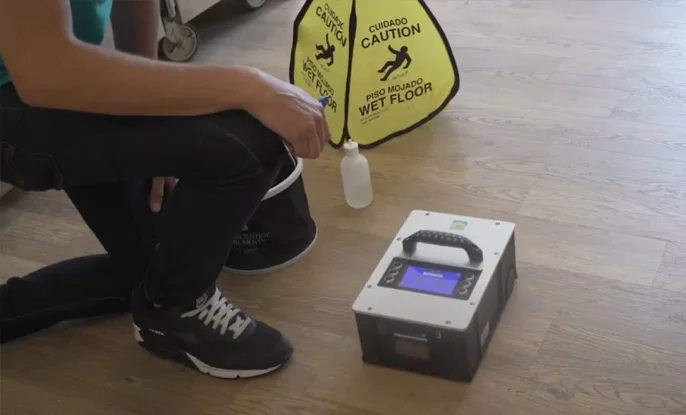
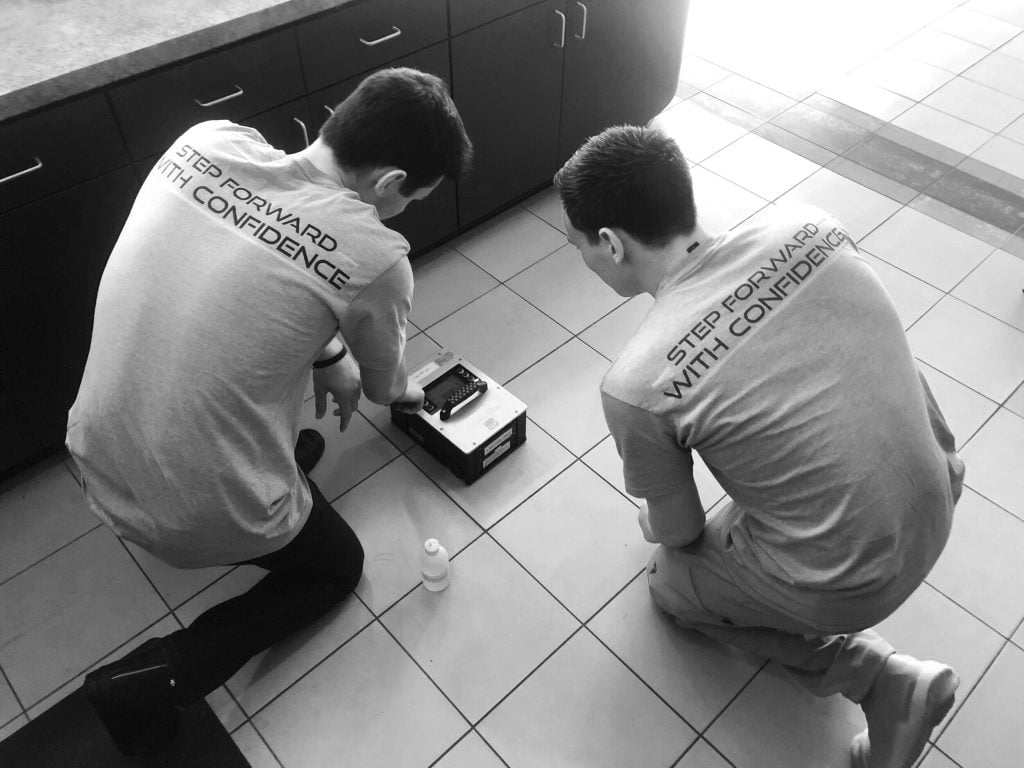
Professional slip resistance testing often uses specialized equipment, such as the BOT-3000E tribometer.
The testing process typically includes:
1. Preparing the ANSI A326.3 Test Area
The floor surface is inspected and documented.
2. Setting Up Equipment for the ANSI A326.3 Test
The BOT-3000E is calibrated according to testing procedures.
3. Performing Multiple ANSI A326.3 Measurements
Several readings may be taken in different locations to identify inconsistencies.
4. Interpreting ANSI A326.3 Test Results
Professionals analyze the data within the context of:
- Floor material
- Environmental conditions
- Maintenance practices
- Moisture exposure
- Foot traffic patterns
The results help organizations understand where improvements may be needed.
Why DCOF Is Important for Facility Managers
Facility managers are responsible for maintaining safe environments.
DCOF measurements help them:
- Identify low-traction areas
- Prioritize maintenance
- Support risk management programs
- Improve floor safety strategies
- Document proactive safety efforts
This data-driven approach is much more reliable than relying on visual observations alone.
Why Work With a Professional Slip Testing Company?
A professional slip testing company helps commercial properties evaluate floor traction using standardized testing methods instead of relying only on visual inspections.
This is especially important for hospitals, banks, office buildings, retail spaces, schools and other high traffic facilities where floor safety must be documented and monitored.
Working with an experienced slip testing company can help property managers identify low traction areas, understand DCOF results and make better decisions about maintenance, cleaning procedures and risk reduction.
A qualified slip testing company also provides objective data that supports safety programs and helps organizations establish a proactive approach to floor safety management.
What Is the BOT-3000E Used for During ANSI A326.3 Testing?
The BOT-3000E is a digital tribometer commonly used in professional slip resistance testing programs.
It is designed to measure floor traction and can be used during ANSI A326.3 evaluations.
The BOT-3000E helps provide:
- Portable on site testing
- Consistent measurements
- Documented results
- Repeatable testing procedures
Organizations can also benefit from specialized training to better understand floor safety assessments.
Common Misconceptions About the ANSI A326.3 Test
Myth 1: A Floor That Looks Safe Is Safe
False.
Many hazardous floors appear clean and polished.
Myth 2: ANSI A326.3 Testing Is Only Needed After an Accident
False.
The best time to evaluate floor safety is before incidents occur.
Myth 3: One ANSI A326.3 Test Is Enough Forever
False.
Floor conditions change over time due to wear, moisture and maintenance practices.
When Should Commercial Properties Schedule ANSI A326.3 Floor Testing?
Consider scheduling testing:
- After floor installation
- After floor treatments
- After renovations
- After a slip-and-fall incident
- When changing cleaning products
- Before high-traffic seasons
- As part of annual safety audits
Regular testing helps organizations identify changing conditions before they become safety concerns.
Partnering with a trusted slip testing company can also help businesses establish a consistent testing schedule based on their facility type, traffic volume and risk level.
How Walkway Management Group Can Help With ANSI A326.3 Testing
Walkway Management Group provides professional slip resistance testing and BOT-3000E training services throughout the United States.
As an experienced slip testing company, Walkway Management Group helps organizations:
- Measure floor traction
- Identify hidden slip hazards
- Understand industry testing standards
- Improve safety programs
- Support risk management initiatives
Internal Resources
Learn more about our Slip Resistance Testing Services to evaluate floor safety in your facility.
Explore our BOT-3000E Training Program to better understand professional floor traction assessments
Helpful Industry Resources
For additional information about floor safety standards, consult these trusted resources:
- ANSI: https://webstore.ansi.org/
- National Floor Safety Institute (NFSI): https://nfsi.org/
- Occupational Safety and Health Administration (OSHA): https://www.osha.gov/
- American Society for Testing and Materials (ASTM): https://www.astm.org/
These organizations provide guidance on safety standards, workplace hazards and best practices for maintaining safer walking surfaces.
Final Thoughts
ANSI A326.3 and DCOF work together to help organizations make informed floor safety decisions. By using objective measurements instead of visual observations alone, commercial properties can better identify risks, improve safety programs, and reduce slip and fall incidents.
For hospitals, banks, office buildings, and other high-traffic facilities, understanding this relationship is an important step toward creating safer walking environments.
Working with a professional slip testing company can further strengthen these efforts by providing accurate measurements, expert guidance and documented results that support long-term safety planning.
Contact Walkway Management Group for professional ANSI A326.3 slip resistance testing and expert support for your floor safety program.
FAQs
What is the ANSI A326.3 Test?
The ANSI A326.3 Test is a testing standard used to measure the Dynamic Coefficient of Friction (DCOF) of hard surface flooring materials.
What is DCOF?
DCOF stands for Dynamic Coefficient of Friction and measures floor traction during movement.
How are ANSI A326.3 and DCOF connected?
ANSI A326.3 is the testing standard and DCOF is the measurement produced during the evaluation process.
What equipment is used during ANSI A326.3 testing?
Professionals often use the BOT-3000E tribometer to measure floor traction.
Why is the ANSI A326.3 Test important?
The ANSI A326.3 Test is important because it provides measurable DCOF data that helps evaluate floor traction. This allows commercial properties to identify potential slip risks, support safety programs and make informed maintenance decisions before accidents occur.